
松研
深圳市淞研精工科技有限公司
Shenzhen SongYan Seiko Technology Co.,Ltd.

松研
深圳市淞研精工科技有限公司
Shenzhen SongYan Seiko Technology Co.,Ltd.


SYS1-DM1A
SYS1-DM1B/C
SYS1-DM2

SYS1-DM3

SYS1-DM5

More+
关于我们
About Us
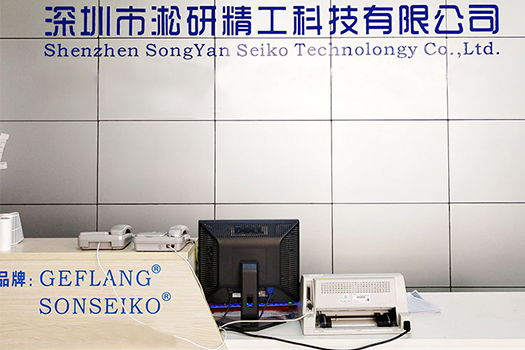
Shenzhen Zhongke Huayi Technology Co., Ltd.
Shenzhen Songyan Precision (SONSEIKO) Technology Co., Ltd. is a high-tech enterprise integrating R&D, sales, manufacturing, and after-sales service. The company has introduced a full set of conductive plastic potentiometers, sensor production technology and craftsmanship from Novotechnik, Germany, as...
应用案列
Case
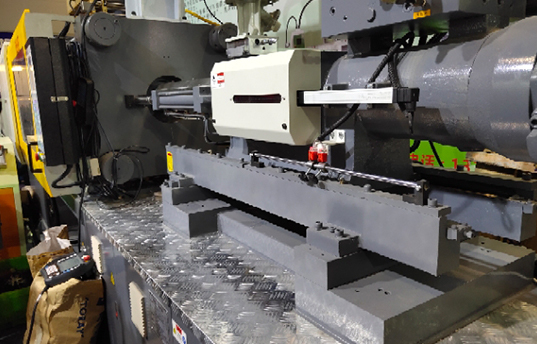
Injection molding machine is abbreviated as injection molding machine. Its working principle is to use the thermoplasticity of the plastic to heat the material by the heating ring of the barrel to melt the material, and then make it quickly flow into the cavity of the mold at high speed and high pressure. After a period of pressure, cooling, solidification and shaping, The mold opens the mold under the action of the clamping system, and the shaped product is ejected from the mold through the ejection equipment. Injection molding is a cyclic process. Each cycle mainly includes: quantitative feeding-melting plasticization-clamping the mold-moving the injection table forward-pressure injection molding-filling and cooling-injection table back-opening the mold-ejecting the product, taking out After the plastic part is closed, the mold is closed again for the next cycle. Because of the design of two circuit boards for signal acquisition and processing, the flexibility of the electronic ruler of the injection molding machine is greatly improved. In this cycle project, the positions of clamping the mold, moving the injection table, injection molding and ejecting products need to be accurately controlled. The injection molding and clamping stroke control of the injection machine play an important role in the performance and product accuracy of an injection molding machine. The position control accuracy of the injection molding machine's clamping mold, injection table movement, injection molding and ejection product position is controlled by the displacement sensor. During injection molding, the molten plastic is injected into the mold cavity through the screw, and the injection and sol position are controlled by the screw drive. The locking of the mold, the movement of the injection molding table, and the ejection of the product are controlled by oil pressure. The size and speed are controlled by the pressure and speed. The position is set by the electronic ruler of the injection molding machine. Although the electronic ruler of all injection molding machines is only a small part of the injection molding machine, it plays a vital role in controlling and setting the clamping of the injection molding machine, the movement of the injection table, and the ejection of the product. With the continuous emergence of new electronic rulers for injection molding machines or being widely used in injection molding machines, there is a good room for improvement of the accuracy of injection molding machines, which will be of great significance for improving the quality of plastic parts and saving production costs.

Pressure sensors are widely used in injection molding machinery plants, water plants, oil refineries, sewage treatment plants, building materials, light industry, machinery and other industrial fields to achieve the measurement of liquid, gas, and vapor pressure. In addition, the pressure sensor is one of the most used measuring devices in the automatic control of the petrochemical industry. In large-scale chemical projects, almost all pressure sensor applications are included: differential pressure, absolute pressure, gauge pressure, high pressure, micro differential pressure, high temperature, low temperature, and remote flange pressure sensors of various materials and special processing . Almost the petrochemical industry's demand for pressure sensors is mainly concentrated in three aspects: reliability, stability and high precision. Among them, reliability and many additional requirements, such as turndown ratio, bus type, etc., depend on the transmitter's structural design, mechanical processing level and structural materials. The stability and high accuracy of the pressure transmitter are mainly guaranteed by the stability and measurement accuracy of the pressure sensor. The measurement accuracy of the pressure transmitter corresponds to the measurement accuracy and response speed of the pressure sensor, and the stability of the pressure transmitter corresponds to the temperature characteristic, static pressure characteristic and long-term stability of the pressure sensor. The petrochemical industry's demand for pressure sensors is reflected in four aspects: measurement accuracy, rapid response, temperature and static pressure characteristics, and long-term stability.